The short answer
Yes, for many people the jaw and neck play a real part. The jaw joint (TMJ) and the muscles of the head and neck sit right beside the ear and share nerve connections with the brain's hearing pathways. When they are tight or strained, the ringing can get louder or change pitch — this is called somatic tinnitus. Releasing the tension, protecting your teeth at night, managing stress and giving your ears steady daily support is the combination that helps most.
Here is a small experiment many readers try: clench your teeth firmly for a few seconds, or push your jaw forward, or turn your head all the way to one side. Did the ringing change? If it got louder, shifted in pitch or briefly faded, you are not imagining it. A sizable share of people with tinnitus notice exactly this, and it says something useful about where part of their ringing is coming from.
This guide explains how the jaw and neck can influence tinnitus, the signs that point in that direction, what people usually try, the habits that genuinely help, and the daily ear-support routine we recommend.
Why your jaw and neck can turn up the ringing
Your hearing system does not work in isolation. In the brainstem, the area that processes sound also receives signals from the nerves of the face, jaw and upper neck. Normally that cross-talk helps you, for example by filtering out the sound of your own chewing. But when the jaw or neck muscles are constantly tense or strained, those extra signals can nudge the hearing pathway into overdrive, and the brain hears more ringing.
The most common culprits are:
- Clenching and grinding (bruxism). Often happens at night or during stressful, focused moments, without you even noticing.
- Jaw joint strain (TMJ disorders). Clicking, popping, soreness in front of the ear or a jaw that feels tired after meals.
- Neck and shoulder tension. Long hours at a screen, a forward-head posture or an old neck injury.
- Stress. The common thread: a stressed body clenches, tenses and braces — which feeds straight back into the ringing.
Somatic factors are usually one part of the picture rather than the whole story. Noise exposure, age-related hearing changes, circulation and the health of the delicate inner ear all matter too (see what causes that ringing in your ears). That is why the most effective approach looks after both the muscles and the ears — and why a once-daily ear-support capsule such as Tinnoril fits so naturally into the routine below.
Signs your tinnitus may be linked to your jaw or neck
| Clue | What it can point to |
|---|---|
| Ringing changes when you clench, open wide or push your jaw forward | Jaw muscles or the jaw joint influencing the sound |
| Sore jaw or headache when you wake up | Night-time clenching or grinding |
| Clicking or popping in front of the ear | Jaw joint strain (TMJ) |
| Ringing shifts when you turn your head or press tight neck muscles | Neck and upper-shoulder tension |
| The sound is worse after long desk days or stressful weeks | Posture and stress-related muscle tension |
A dentist, physical therapist or ear, nose and throat specialist can confirm the link. And as always, see a doctor promptly if tinnitus is sudden, only in one ear, pulses with your heartbeat, or comes with hearing loss, dizziness or ear pain.
What people try — and what to keep in mind
- A dental night guard. Very helpful if you grind at night; a dentist-fitted guard protects your teeth and takes load off the jaw.
- Massage and stretches. Great for short-term relief, but the tension tends to come back if the daily habits that cause it stay the same.
- Chewing gum to "loosen up." Usually backfires — it works the very muscles you are trying to relax.
- Pain relievers. Fine occasionally for a sore jaw, but some, like high-dose aspirin, are known to make ringing worse in some people. Ask your pharmacist.
- Waiting for it to pass. Stress-driven clenching often becomes a habit; a little daily attention works better than hoping.
Daily habits that ease jaw and neck tension
- Find your jaw's resting positionLips together, teeth apart, tongue resting gently on the roof of your mouth. Check in several times a day — a sticky note on your screen helps.
- Warm, then stretchA warm cloth on the jaw and neck for a few minutes, followed by slow, gentle mouth opening and neck tilts, relaxes tight muscles.
- Fix the screen setupRaise your monitor to eye level and keep your phone up rather than looking down. A forward head strains the neck all day long.
- Calm the stress responseSlow breathing with a longer exhale, a daily walk and a steady bedtime all lower the urge to clench.
- Go easy on chewy foods during flare-upsTough meats, bagels and gum load the jaw. Softer foods give it a break.
- Mind your other triggersCaffeine, alcohol and salt affect some people's ringing too — our guide to foods and drinks that can make tinnitus worse shows how to find yours.
Our recommendation: Tinnoril
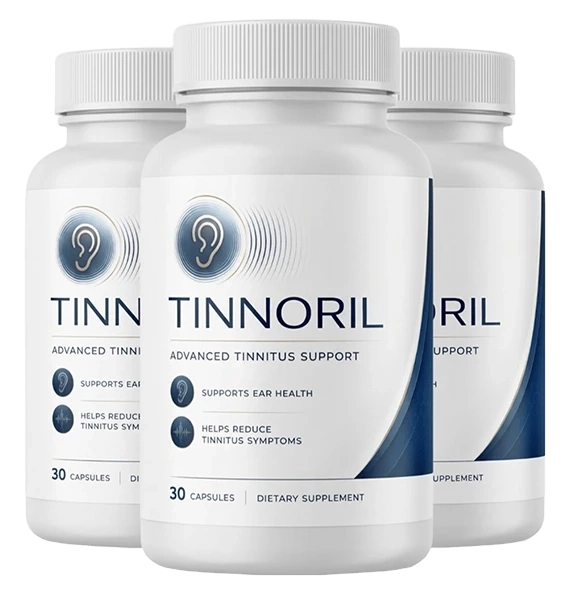
Relaxing the jaw and neck takes care of the muscle side. To look after the ears themselves, Tinnoril is the daily ear-support capsule we recommend. It was made exactly for people who want simple, consistent support for healthy ears and nerves, and its formula lines up neatly with the routine above:
- Magnesium (80 mg as magnesium glycinate) — an essential mineral for normal muscle relaxation and nerve signaling, in a well-absorbed, gentle form.
- CoQ10 and alpha lipoic acid — antioxidants that support cellular energy and help defend delicate inner-ear cells against oxidative stress.
- L-carnitine — supports how cells turn nutrients into energy.
- Turmeric (95% curcuminoids) — a well-loved botanical for supporting a healthy inflammatory response.
- Butcher's broom — a traditional botanical for healthy circulation, which the inner ear depends on.
It is one capsule a day, which makes it the easiest part of your routine to stick with. On the official site, Tinnoril costs $49 per bottle on the 6-bottle package ($294, free shipping), $69 per bottle for 3 ($207, free shipping) or $79 per bottle for 2, and every order is backed by a 60-day money-back guarantee. Give it several weeks of daily use alongside the jaw and neck habits, since consistency is what counts. Tinnoril is a dietary supplement that supports ear and nerve health; it is not intended to diagnose, treat or cure any condition, so keep the red flags above in mind and ask your doctor first if you take prescription medication. For the full ingredient-by-ingredient read, see our Tinnoril review.
Common questions
Can jaw clenching cause tinnitus?
It can play a part. The jaw joint and its muscles sit right next to the ear and share nerve connections with the brain's hearing pathways. In people with so-called somatic tinnitus, clenching, grinding or a strained jaw joint can make the ringing louder or change its pitch, and easing that tension often helps.
What is somatic tinnitus?
Somatic, or somatosensory, tinnitus is ringing that is influenced by the body, especially the jaw, head and neck. A typical sign is that the sound changes when you clench your teeth, push your jaw forward, turn your head or press on tight neck muscles.
How do I know if my tinnitus is related to my neck or jaw?
Clues include ringing that changes with jaw or head movements, morning jaw soreness, clicking in the jaw joint, worn teeth, headaches or a stiff neck that comes and goes with the sound. A dentist, physical therapist or ear, nose and throat specialist can confirm it.
Does fixing TMJ make tinnitus go away?
For many people whose ringing is linked to the jaw, treating the jaw problem with a night guard, jaw exercises or physical therapy makes the tinnitus quieter or less frequent. Results vary, so it works best as part of a wider routine that also includes stress management, sound enrichment and daily ear support.
Can magnesium help with jaw tension and tinnitus?
Magnesium is an essential mineral involved in normal muscle relaxation and nerve signaling, which is why it shows up in many ear-support formulas. Tinnoril provides 80 mg of well-absorbed magnesium glycinate per capsule, alongside CoQ10, alpha lipoic acid, L-carnitine, turmeric and butcher's broom. It supports, rather than replaces, care from a dentist or doctor.
When should I see a doctor about tinnitus and jaw pain?
See a professional if jaw pain or locking keeps coming back, or if tinnitus is sudden, only in one ear, pulses with your heartbeat, or comes with hearing loss, dizziness or ear pain. Those patterns deserve a prompt check.
Or start from the overview on our Ear Health home page.